

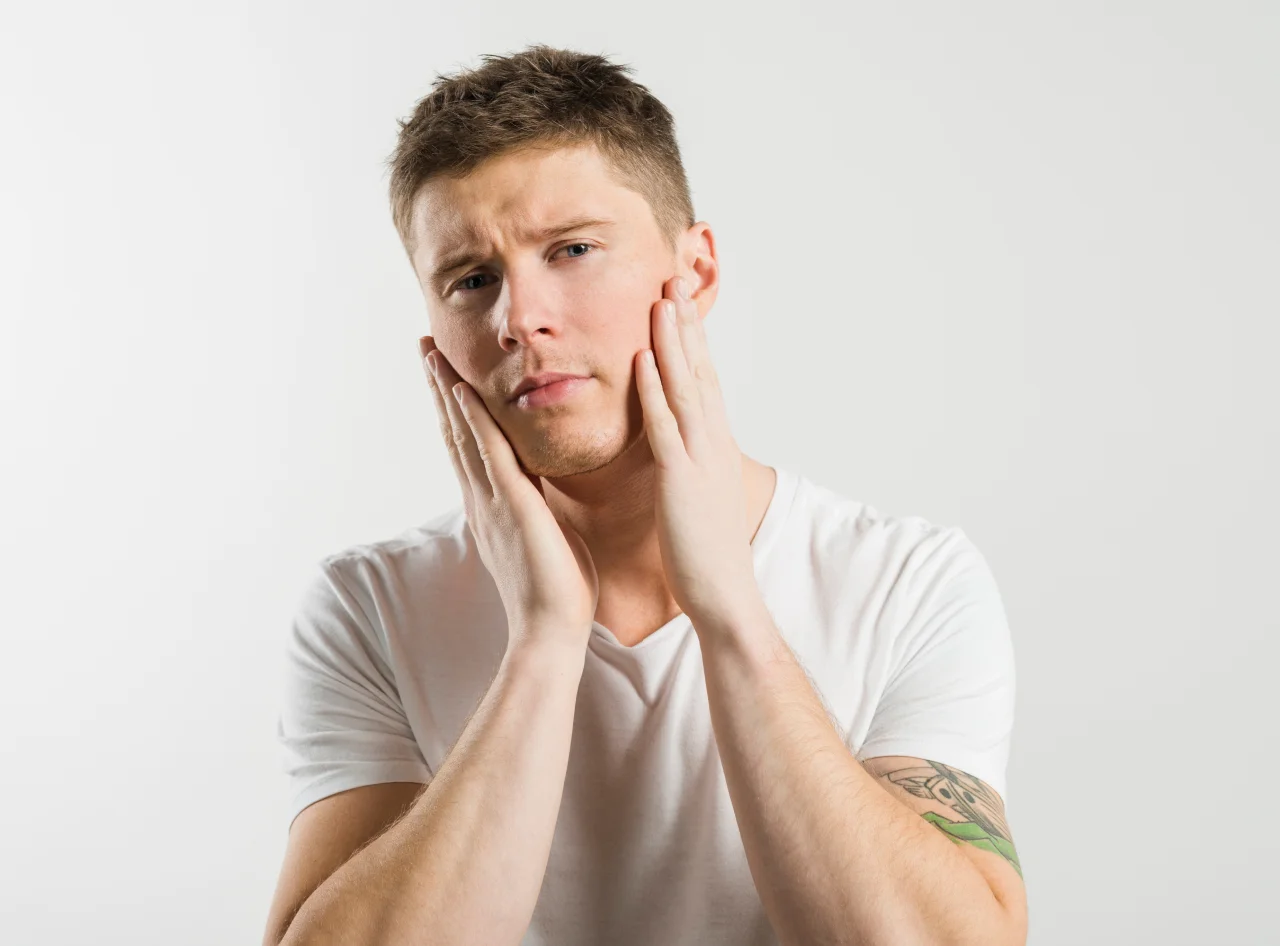
Jaw clicking can become painful when the joint or the muscles around it are strained, injured, or overworked after years of moving without trouble. In many cases, the exact cause is unclear, and several factors often combine.
A click that once caused no discomfort is not always a warning sign, but new pain deserves attention. This blog explains why jaw clicking becomes painful, which signs matter, which gentle steps are usually tried first, and when to book a dental exam.
Why a Harmless Click Can Start to Hurt
The temporomandibular joint connects the lower jaw to the skull and works every time a person speaks, chews, or yawns. The cause of pain is often unclear and may involve more than one factor at once.
Several possibilities are commonly discussed.
- A knock or strain to the jaw can irritate the joint.
- Frequent clenching or grinding can overwork the jaw muscles and the joint.
- Long-standing changes inside the joint can make movement less smooth.
- Some people feel jaw pain more strongly than others.
Clicking Without Pain Is Often Harmless
Clicking by itself is common. Clicking or popping without pain is generally considered normal and does not need treatment.
Most people with a clicking joint have no pain or locking, so a click that becomes painful is the change worth noticing. Pain, stiffness, or a change in how the jaw moves is a reason to have it looked at.
Signs That Call for a Dental Evaluation
TMJ clicking pain deserves a closer look when it comes with other changes. These signs are worth mentioning to a dentist or doctor.
- Pain in the jaw joint, face, or chewing muscles that does not settle.
- Clicking that now hurts, or sounds like grating or popping with pain.
- Limited opening, stiffness, or the jaw locking.
- Ringing in the ears, dizziness, or a change in how the teeth fit together.
There is no single test for these problems. The clinician reviews the history, examines the jaw, and sometimes orders imaging, since other conditions may need to be ruled out first.
Gentle Steps Usually Tried First
Many jaw joint problems are temporary, and simple measures are recommended before anything more involved. Common first steps include eating soft foods, applying warm or cold packs to the face, and doing gentle jaw stretches.
Reducing clenching, gum chewing, and nail biting can also help, as can relaxation techniques. Physical therapy or counselling may follow if symptoms continue. Permanent changes to the bite are generally avoided as a first step.
Jaw Joint Care in South Surrey
At Rosemary Heights Dental Centre in South Surrey, British Columbia, we have served patients since 2004 and welcome families and individuals from White Rock, Surrey, and nearby neighbourhoods. We offer TMD and TMJ treatment, sedation, and dental emergencies for children, teens, and adults.
Patients who notice clicking that has started to hurt are welcome to ask our team to examine the jaw and discuss what may be contributing to it. We offer same-day and next-day emergency appointments and online scheduling, which can help when pain appears suddenly.
Planning Jaw Joint Care in South Surrey, BC
A painful click is a change worth taking seriously, and the first steps are often simple. Patients in Surrey and White Rock who notice jaw clicking that becomes painful are welcome to ask our team at Rosemary Heights Dental Centre about TMD care.
Frequently Asked Questions
How can stress contribute to jaw pain without being the only cause?
Stress can lead to clenching and muscle tightness, which may strain the jaw. Injury, joint changes, and individual pain sensitivity also play a role, so stress is usually one piece of a larger picture.
What does jaw locking suggest about the temporomandibular joint?
Locking suggests the joint is not gliding as it should, and the jaw may catch when opening or closing. It is a sign worth having examined, especially when it repeats or limits eating, and we can take a look.
Can a nightguard help some patients with jaw muscle tension?
Some people find a nightguard helpful, though results vary from person to person. We adjust it to feel comfortable, and use should stop if it causes pain or changes how the teeth meet.
When is imaging needed for persistent TMJ symptoms?
Imaging such as an X-ray, MRI, or CT scan may be considered when symptoms persist, when the diagnosis is unclear, or when other conditions need to be ruled out. We do not need it for every case.
Can clenching or grinding make jaw joint symptoms worse?
Yes, repeated clenching or grinding puts extra load on the joint and the muscles around it. Many people do this during sleep without knowing, which is why morning jaw soreness is worth mentioning to us.